Tech4All Teaching Methdology
Bloom's two-sigma problem


Learners who are taught in the traditional instruction-based model have the lowest level of understanding of the material.
Students who were taught using the Mastery Learning method performed one standard deviation better than those taught using the traditional instruction method. The Mastery Learning approach is breaking the material into milestones with assessments along the way. The students then go through the material at their own pace until they have learned it. In order to move on to the next milestone, the student must take an assessment which tests their mastery of the current milestone. Only until they have achieved at least 90% on one level are they allowed to move on to the next. This process is repeated until the student has learned all the material.
A further one standard deviation improvement (98% better than instruction-based teaching) is the 1-on-1 tutoring model where students are being taught and assessed directly by a tutor who is a subject-matter expert. I believe that the reason why 1-on-1 tutoring is so effective is for the following reasons:
- The student gets more rapid feedback which increases their rate of improvement
- The teacher can adapt their teaching style to the student
- The teacher ensures that the student remains concentrated while learning
For Tech4All, although it is not possible to have 1-on-1 tutoring for learners, Mastery Learning can be adopted where we only allow students to proceed to the next module if they complete an assessment about the preceding module and pass with 90%+. We can also try and capture some of the benefits of 1-on-1 tutoring by providing feedback to students when reviewing their assessments and being available to answer questions.
Mindmapping
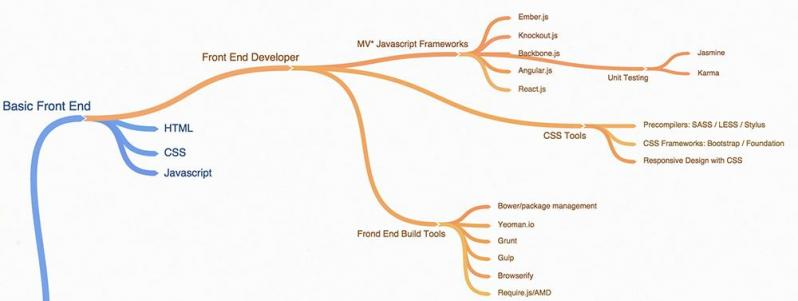 Mindmapping is a popular learning technique that leverages the visual parts of our brains. A mindmap has the core concept in the centre and topics under that concept branching out. The learner is supposed to make a mindmap for themselves. As they learn the topic, they will add more and more concepts to the map and the connection between them. By the end of learning a concept, they will have a complete map of all the sub-components and their inter-relations.
As the learner learns on the Tech4All learning platform, they can begin filling out their mindmap of each concept instead of taking notes. Alternatively, we can provide existing mindmaps of the concepts and their inter-relations so that the students can see where each concept fits into the big-picture.
Bloom's taxonomy
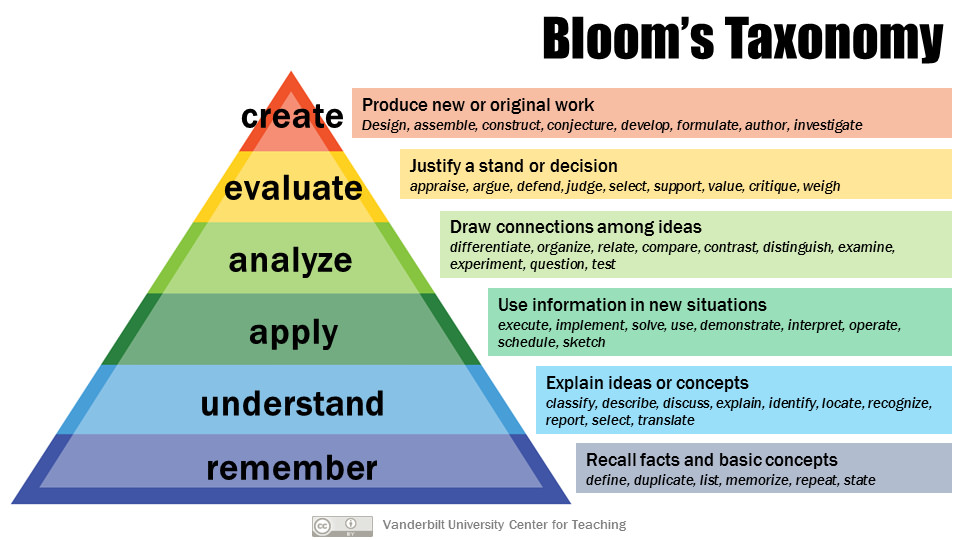 Bloom's Taxonomy categorises learning levels. The lowest level of learning is rote memorisation. Surprisingly, understanding is only one level up from memorisation. At the highest level, learners have such mastery over the material that they are able to use it to create new knowledge.
For Tech4All, telling learners to create projects from scratch is a good way to achieve the highest level of learning. Instead of strictly defined exercises, the learner can be given a small project to build leveraging the concepts they have just learn in the module.
Spaced-repetition and active recall
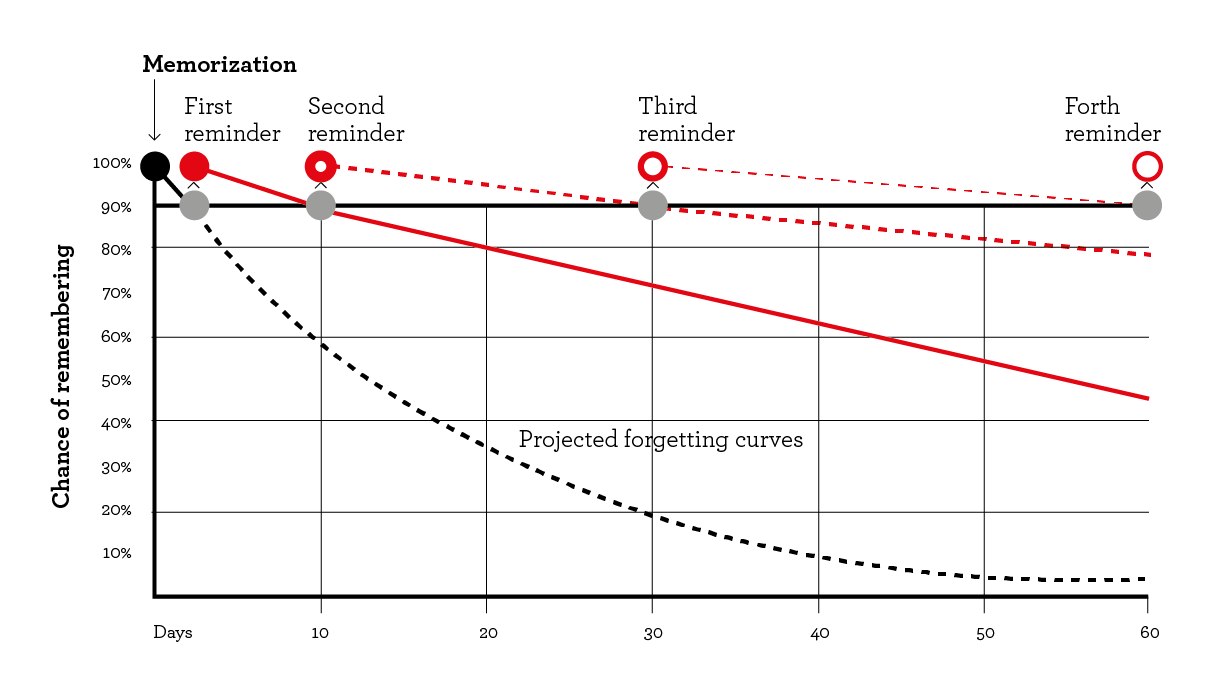
Although memorisation is the lowest level of learning according to Bloom's taxonomy, it is still the foundation upon which all the higher levels rest. Remembering what you learn is a necessary precondition for everything else.
The most effective evidence-based approach to memorisation is using active recall and spaced repetition. The above graph shows that people forget things they learn quite rapidly over time. However, each time they need to recall the information, it resets the knowledge in their memory and it also takes longer for them to forget again. The graph shows us that being reminded a few times over the course of a couple of months can significantly improve the amount of material a student recollects.
For Tech4All, the learner can be given questions at the end of each module as part of the assessment to pass to the next module. Those questions can then be saved in a deck and they will be given those questions periodically to review whenever they login to the learning platform. The questions which the students consistently answer correctly will be shown with decreasing frequency. Conversely, the questions which the students find consistently hard to answer will be shown more often. This system will be extremely similar to Anki decks.
Gamification
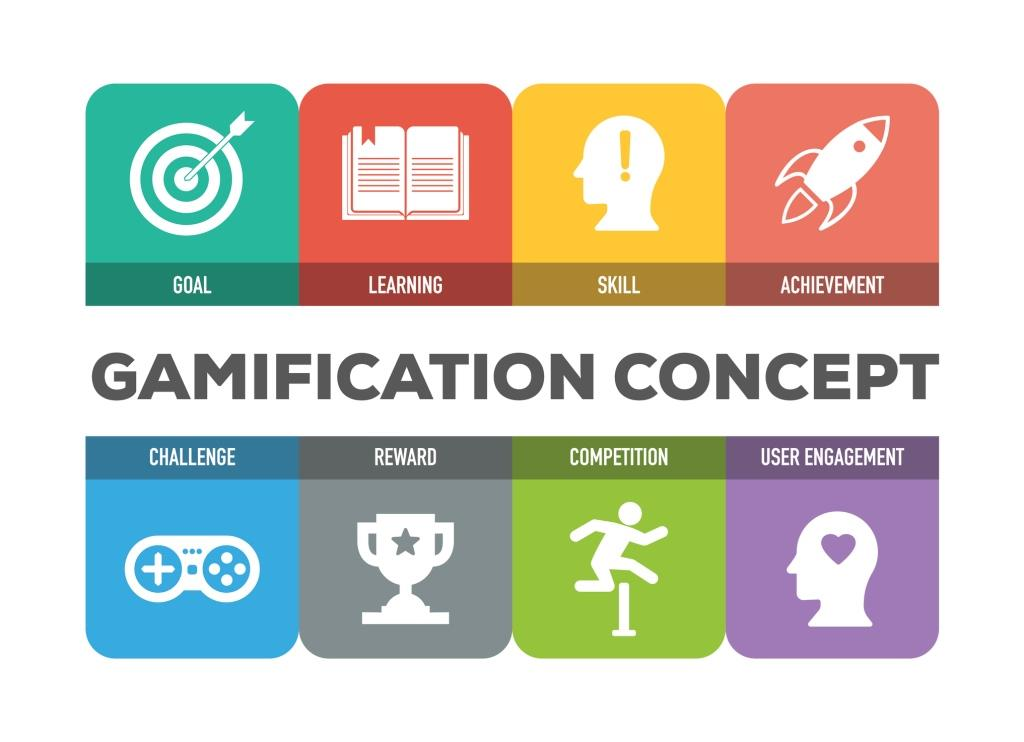 Gamification of a learning experience is adding game-like elements to the learning platform. Gamification involves adding artificial rewards for achievement which taps into the learner's brain's reward centres. Gamification makes the learner more motivated to continue learning which is particularly important for self-directed learning where motivation is more important than when learning under supervision.
A particular point of consideration for gamification of learning platforms is that rewards must be given for competence, not completion. Rewarding completion sets the wrong incentive as it turns learning into a box-checking exercise to get the rewards without having learning and mastery at its core.
For Tech4All, streaks can be used for consecutive days that the learner has achieved a module which incentivises consistency. The streak can be frozen on weekends to allow learners a break from learning. Badges can be obtained for high-achievement in end-of-module quizzes or projects. For example, obtaining 100% in a quiz can yield a badge or going above and beyond for a project can also yield a badge.
Multimodal Teaching
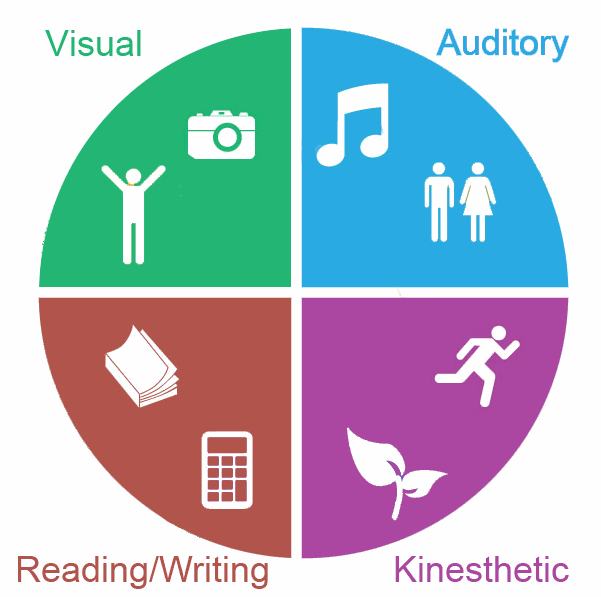 There is a common myth that there are different types of learners - some people learn better visually, others by listening to instructions and others by reading. Studies testing this theory out have disproven that this effect exists, however, the studies have come to another more interesting finding that students learn best when presented with information in multiple formats. Learning material with visual, auditory and text elements engender the highest levels of understanding for students.
For Tech4All, we can leverage this by presenting learning material in a variety of ways. The concepts can be introduced through a video and can be explained in more detail through text interspaced with illustrations and diagrams.
Community
Having a community of learners improves student outcomes as they can ask for help from others which gets them unstuck and allows them to benefit from the knowledge of their peers. Being part of the community also means that the learner can help others and teaching others is a good way to learn the material. Finally, a big problem with online self-directed learning is that it is lonely and having access to a community with whom the learner can relate will alleviate this loneliness.
For Tech4All, we can create a Discord server for the learners. They can then ask and answer questions as well as discuss concepts with fellow learners.